Feeds:
Posts
Comments

Archive for the ‘livestock’ Category

Literary fowl

The Cresset picked up one of my pieces about the backyard hooligans. It’s from several years back–I read it at EMU and later used it as a summer sermon at Shalom Mennonite. I’m glad it found a home in print.

For the few brave subscribers–I’m clearly not a prolific blog updater these days. It turns out I’m a one-blog kind of woman. Most of my energy is currently going into the Tongue Screws and Testimonies site. Don’t worry, though. I’ll be back.

Read Full Post »

God Save the Queen!

The queen must die, we decided this weekend.

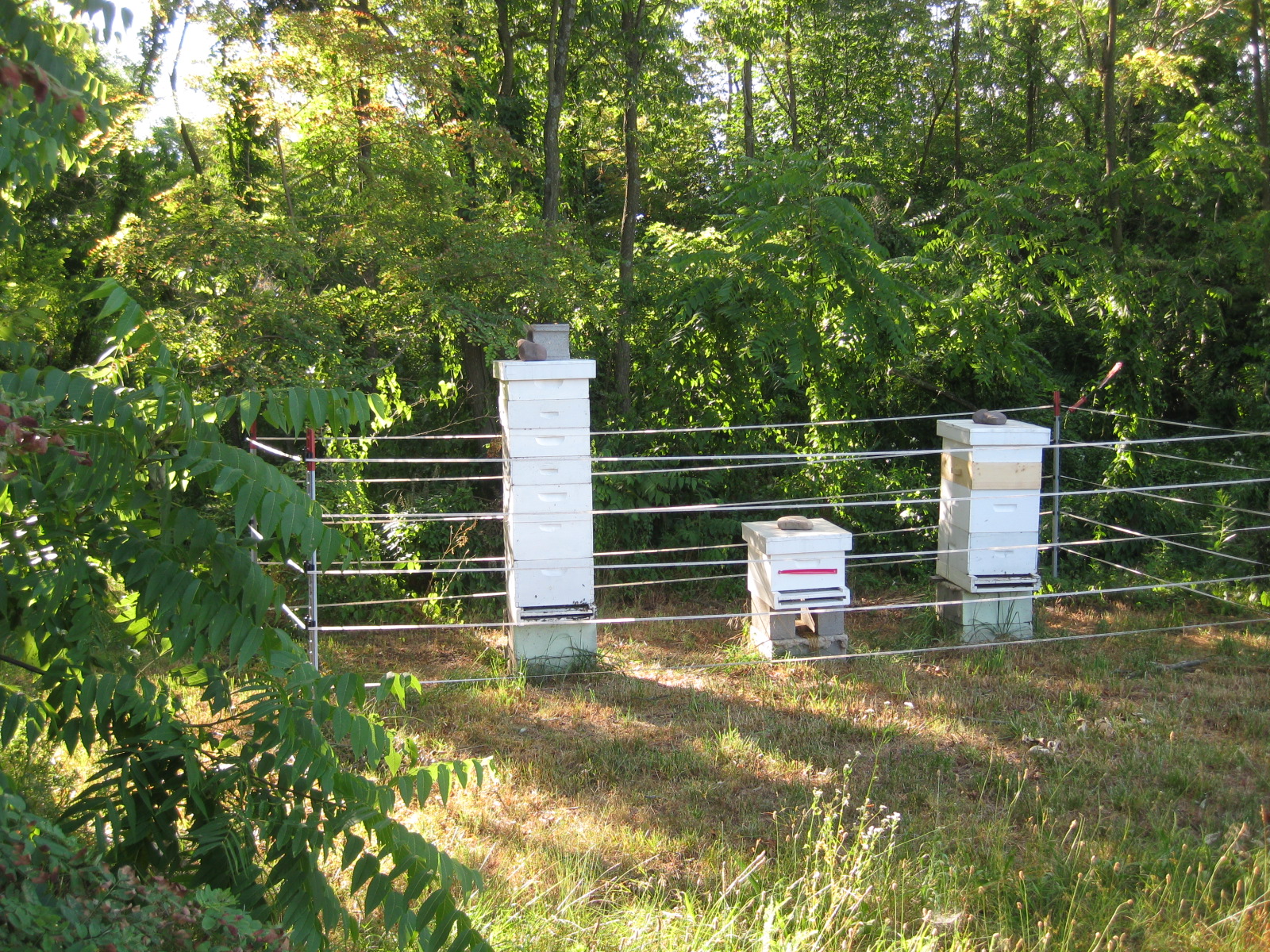
Hive #1 has been our best hive for a couple of years. This year, our first year to harvest honey, we took 5 supers off that single hive, a little more than 10 gallons. It’s the towering “beescraper” on the left, below. By mid-July when we harvested, we added yet another deep body to the stack so that the bees wouldn’t swarm for lack of space. We named the queen  Imelda because we imagined that the queen of such a massive bee city would have a lot of shoes in her bee closet. It has been a mega-city, a bee-tropolis. But today, we planned to kill the queen.

Imelda's hive

We’ve been going through the hives lately to make sure they’re adequately prepared for winter, and we found that hive #1 had no eggs or small brood, a sign that the queen had failed. (Eventually, she just runs out of eggs.) Usually, the bees take care of succession themselves, starting a new queen when the old one begins to falter, but it’s too late this season for them to manage, so we planned to pick up a new queen Monday. First, though, we’d have to assassinate Imelda so that her workers would be ready to transfer their allegiance.

I was reluctant to re-queen the hive–I’d much rather let the bees raise one of her daughters since she clearly has good genetics. So we were very pleased to find two frames full of Imelda’s eggs and small brood this afternoon–and Imelda herself, still fat and glowing.

Guess she just got back from summer vacation. No sign of her shoes, though.

Read Full Post »

Tonight I cooked pork chops for the first time in my life. And they were good.

I’m not usually a big fan of meat. Until I married Jason, I was practically a vegetarian, but he’s a farm boy and likes to sink his teeth into once-living flesh now and then. Since we started butchering our own poultry, we’ve had a decent supply of chicken and duck, and I’ve learned to enjoy meat with a history.

A couple of weeks ago, we visited family in southern Indiana and stopped to see old friends at Brambleberry Farm. We took them honey from our bees and five young Muscovy ducks. In turn, they gave us several nut trees from their nursery, some seed garlic, and a selection of cuts from some of their American Guinea Hogs. Thus, tonight’s pork chops.

I dredged the chops in flour, salt, and pepper, and did a simple saute in butter and olive oil. The meat had more body than the pork chops I’ve encountered before, almost like steak and, as Jason said, “It has flavor.” An incredibly rewarding flavor. In the end, I picked up the remains of the chop and gnawed at the bone like a barbarian, unwilling to let a morsel go to waste.

I wonder if they’ll want more honey next year?

*Insert reality check here: as all of us who care about global warming know, it’s wisest to shun meat. Meat remains a once-a-week treat for us, but what a treat when it comes with a history!

*Reality check B: the five Muscovy ducks were still young, small enough to all fit into a large cardboard box. I don’t recommend traveling with full-grown ducks. Though some do.

Read Full Post »

Read a bit of my work over at The Tusculum Review.

On the twelfth day of the first year of the Obama administration, as the nation’s economy continued to crumble, we opened our beehive and found the colony dead.

Through most of the winter, we left the bees alone so as not to release the heat they generated huddled between their walls of honey. But when the temperature rose into the 50s, the bees could bear the air enough to take brief cleansing flights, and we dared to open the hive for a few minutes. We had plenty of unseasonable warmth this year—sunny days when the bees flew to gather maple sap, risen during the freezing night, draining through holes the sapsucker drilled through the bark. No bees were flying the afternoon we opened the hive, but we assumed they’d finished their business in the warmest part of the day. A few dead bees lay scattered below the hive, evidence of the cleaning efforts of the workers.

Read on.

Read Full Post »